-
Best Website Traffic Generator
Web Traffic ServicesStrategy
AI Technology
Solutions
Expert BlogBest Website Traffic Generator
The definitive 2026 solution for hyper-targeted organic growth. Influence search engine algorithms with advanced behavioral simulation and premium traffic signals.
The Digital Landscape of 2026: Why Traffic is King
In 2026, the internet is more competitive than ever. Search engines like Google have moved beyond simple keyword matching and now rely heavily on E-E-A-T (Experience, Expertise, Authoritativeness, and Trustworthiness) and real-time behavioral signals. Finding the best website traffic generator is no longer just about increasing a number on a counter; it is about providing the high-fidelity engagement data that modern search algorithms demand.
Whether you are launching a new e-commerce brand or managing a high-authority news portal, the “Cold Start” problem remains a significant barrier. Without initial visibility, you cannot gain the data needed to rank. Our comprehensive web traffic services are designed to bridge this gap, providing the momentum required to convince search engines that your site is a relevant destination for your target keywords.
Building Domain Authority in 2026
Modern SEO success is built on a foundation of trust. By utilizing traffic signals that exhibit high retention and multi-page interaction, you signal to AI-driven crawlers that your content is valuable. This “trust bootstrapping” allows your organic positions to rise faster than traditional SEO methods alone.
AI Behavioral Simulation vs. Traditional Traffic
The core technology behind your traffic source determines the longevity of your rankings. In our 2026 technical analysis of AI traffic generators versus traditional systems, the results are clear: behavioral simulation is the only safe way to scale.
The Evolution of Bot Detection
Traditional generators of the past relied on static proxy lists and repetitive scripts. Modern analytics suites now identify these patterns instantly. In contrast, an AI website traffic generator uses machine learning to mimic human habits. This includes non-linear mouse movements, varied scrolling speeds, and interaction with UI elements like menus and buttons.
For those looking for a technical blueprint on how to implement these advanced tools, we recommend reading the definitive 2026 AI website traffic generator guide. This resource explains how to sync your traffic generation with your content calendar to maximize the impact on your Search Engine Results Pages (SERP).
Tailored Solutions for Specialized Niches
In 2026, relevance is the ultimate currency. To succeed, you must ensure that your traffic matches your site’s niche and geographic location. By accessing premium organic traffic categories, you can customize your visitor profile to align perfectly with your business goals.
- Organic Search Traffic: Drive visitors who search for your brand or keywords, significantly boosting your CTR (Click-Through Rate).
- Geo-Targeted Visitors: Target specific regions, states, or countries to strengthen local SEO signals.
- Social Referral Traffic: Mimic traffic coming from platforms like TikTok, LinkedIn, and Instagram to build social proof.
- Drip-Feed Technology: Ensure your growth looks natural by distributing visits gradually over days or weeks.
Safety, ROI, and Long-Term Stability
The ultimate goal of using the best website traffic generator is a measurable Return on Investment. By boosting your rankings for primary keywords, you open the floodgates for real, paying human customers. Our systems are designed to be 100% Adsense and analytics safe, providing you with the data you need without the risk associated with low-quality providers.
Conclusion: Strategic Growth in the AI Era
As we navigate 2026, the integration of AI into every facet of the web means that only the most sophisticated marketing strategies will survive. Traffic generation is a powerful tool when used with precision and high-quality behavioral signals. It is the catalyst that turns a quiet website into a thriving digital authority.
Ready to transform your digital presence? Explore our full range of web traffic services today and experience the difference that high-authority, AI-driven traffic can make for your brand’s future.
-
The Digital Navigator: A Marketer’s Guide to Tracking Website Traffic (10 Essential Tools)

The Digital Navigator: A Marketer’s Guide to Tracking Website Traffic (10 Essential Tools)
Tracking website traffic is the bedrock of digital success. It moves marketing from guesswork to a predictable science. Without accurately measuring who is visiting your site, where they came from, and what they do once they arrive, every marketing decision is a shot in the dark.
This comprehensive guide will introduce you to the ten most essential tools for traffic analysis, with a special focus on the two giants of the industry—Google Analytics and Google Search Console (Webmaster Tools)—to give you a complete, holistic view of your audience.
Part 1: The Core Duo – Google Analytics and Search Console

Photo by Pixabay on Pexels.com These two free tools, often mistakenly used interchangeably, provide two distinct, crucial perspectives on your traffic. Together, they tell the full story of your audience’s journey.
1. Google Analytics (GA4) – The User Behavior Tracker
What it Tracks: User Behavior on your site. Once a user lands on a page, GA tracks their entire journey: what pages they view, how long they stay, what buttons they click, and where they convert (or leave).
Key Metrics to Track:
Metric What It Tells You How to Find in GA4 Users / Sessions How many unique visitors came (Users) and how many visits occurred (Sessions). Reports > Life Cycle > Traffic AcquisitionTraffic Source / Medium The specific channel the user came from (e.g., Google/Organic traffic, Facebook / Social, Email / Newsletter). Reports > Life Cycle > Traffic Acquisition(Look at the “Session default channel group” dimension).Engagement Rate The percentage of sessions that were engaged (lasted longer than 10 seconds, had 2+ page views, or included a conversion event). Reports > Life Cycle > Traffic AcquisitionConversions How often users complete a defined goal (e.g., purchase, form fill, PDF download). Reports > Life Cycle > Engagement > ConversionsDemographics The location, age, gender, and interests of your visitors. Reports > User > DemographicsSpecial Focus: The Traffic Acquisition Report (Source/Medium)
This is the most critical report for understanding where your traffic originates. In the GA4 Traffic Acquisition report, you must use the Session source / medium dimension. This reveals the specific campaigns and platforms driving traffic, allowing you to double down on high-performing channels and stop wasting money on underperforming ones.
2. Google Search Console (GSC) – The Pre-Click Diagnostic
What it Tracks: Search Performance before a user clicks your link. GSC shows you how often your site appears in Google search results and what keywords trigger those appearances.
Key Metrics to Track:
Metric What It Tells You How to Find in GSC Impressions The number of times your site link appeared in search results for any given query. Performance > Search ResultsClicks The number of times users actually clicked on your link and came to your site. Performance > Search ResultsAverage Position The average rank of your pages for specific keywords. Performance > Search ResultsClick-Through Rate (CTR) The percentage of impressions that resulted in a click (Clicks / Impressions). Performance > Search ResultsQueries The exact keywords people searched for that caused your site to appear. Performance > Search Results(Under the ‘Queries’ tab)Special Focus: Connecting GA4 and GSC
The data in these two tools should be linked. Connecting them allows you to see the keywords (from GSC) that brought people to your site, alongside their behavior (from GA4) once they arrived. This correlation is the key to true SEO optimization. You might find a high-ranking keyword (GSC) that leads to a poor engagement rate (GA4), signaling a misalignment between the search result and the landing page content.
Part 2: The Extended Toolkit – 10 Essential Traffic Tracking Tools
While Google’s tools are mandatory, a sophisticated marketer needs additional platforms to track competitor performance, user experience, and full funnel analysis.
I. SEO & Competitive Analysis Tools
These tools estimate traffic for any website, including your competitors, and provide essential keyword insights.
Tool Primary Tracking Feature How It Complements GA/GSC 3. Semrush Traffic Analytics (Estimates competitor traffic volume and distribution by channel). Reveals competitor keyword strategy and top traffic sources you can target. 4. Ahrefs Site Explorer (Provides estimated Organic Traffic, value, and the exact keywords driving that traffic). Excellent for finding high-value keywords your competitors rank for but you missed. 5. Similarweb Digital Intelligence (Provides industry-wide traffic share, global ranking, and audience overlap data). Gives a macro view of the market and identifies emerging traffic channels in your industry. II. Behavior and User Experience (UX) Tools
These tools track how users interact with your pages, supplementing the quantitative data from Google Analytics.
Tool Primary Tracking Feature How It Complements GA/GSC 6. Hotjar Heatmaps & Session Recordings (Visual representation of clicks, scrolls, and mouse movements). Explains why the bounce rate (GA4 metric) is high on a specific page by showing you exactly where users get confused or bored. 7. Microsoft Clarity (Free) Instant Heatmaps & Session Replays (Automatically generates behavior tracking with easy setup). Provides the visual evidence of user struggle and friction points that raw numbers can’t show. III. Funnel & Event Tracking Tools
These tools are essential for complex applications, e-commerce, or subscription models where tracking user actions (events) across a journey is key.
Tool Primary Tracking Feature How It Complements GA/GSC 8. Mixpanel Event-Based Analytics (Focuses on user actions: sign-ups, feature usage, checkout steps). Tracks sophisticated user behavior after the conversion goal, analyzing retention and feature adoption. 9. Kissmetrics People-Based Tracking (Connects all user actions to an individual person/email, not just a device). Essential for linking marketing activity to long-term customer value and churn rates. IV. Server and Infrastructure Tools
This tool is vital for diagnosing site health and response time, which directly impact crawl efficiency and user experience.
Tool Primary Tracking Feature How It Complements GA/GSC 10. Server Log Files Server Request Tracking (Raw files detailing every request to your server, including search engine bots). The only way to track actual search engine bot activity (like Googlebot) for deeper crawl analysis. Part 3: Establishing a Holistic Tracking Strategy
To use these 10 tools effectively, you must establish a clear strategy:
- Start with the Core: Install Google Analytics (GA4) and verify your site with Google Search Console (GSC). Link them both immediately.
- Define Your KPIs: Decide what success looks like (e.g., “Increase organic traffic by 15%” or “Reduce checkout abandonment by 10%”).
- Use the Right Tool for the Question:
- Question: What keywords are bringing people to my site? Tool: GSC (Queries Report).
- Question: Which marketing channel had the best engagement rate last month? Tool: GA4 (Traffic Acquisition Report).
- Question: Why are people leaving the pricing page? Tool: Hotjar/Clarity (Session Recordings and Heatmaps).
- Question: What are my biggest competitors doing? Tool: Semrush/Ahrefs (Traffic Analytics).
By integrating data from these tools, you move beyond simple traffic counting. You start understanding the full customer journey, from the moment a person types a query into Google to the moment they convert on your site.
-
How to Increase Website Traffic: 11 Proven Strategies for Success
-
How to Increase Website Traffic: 11 Proven Strategies for Success
-
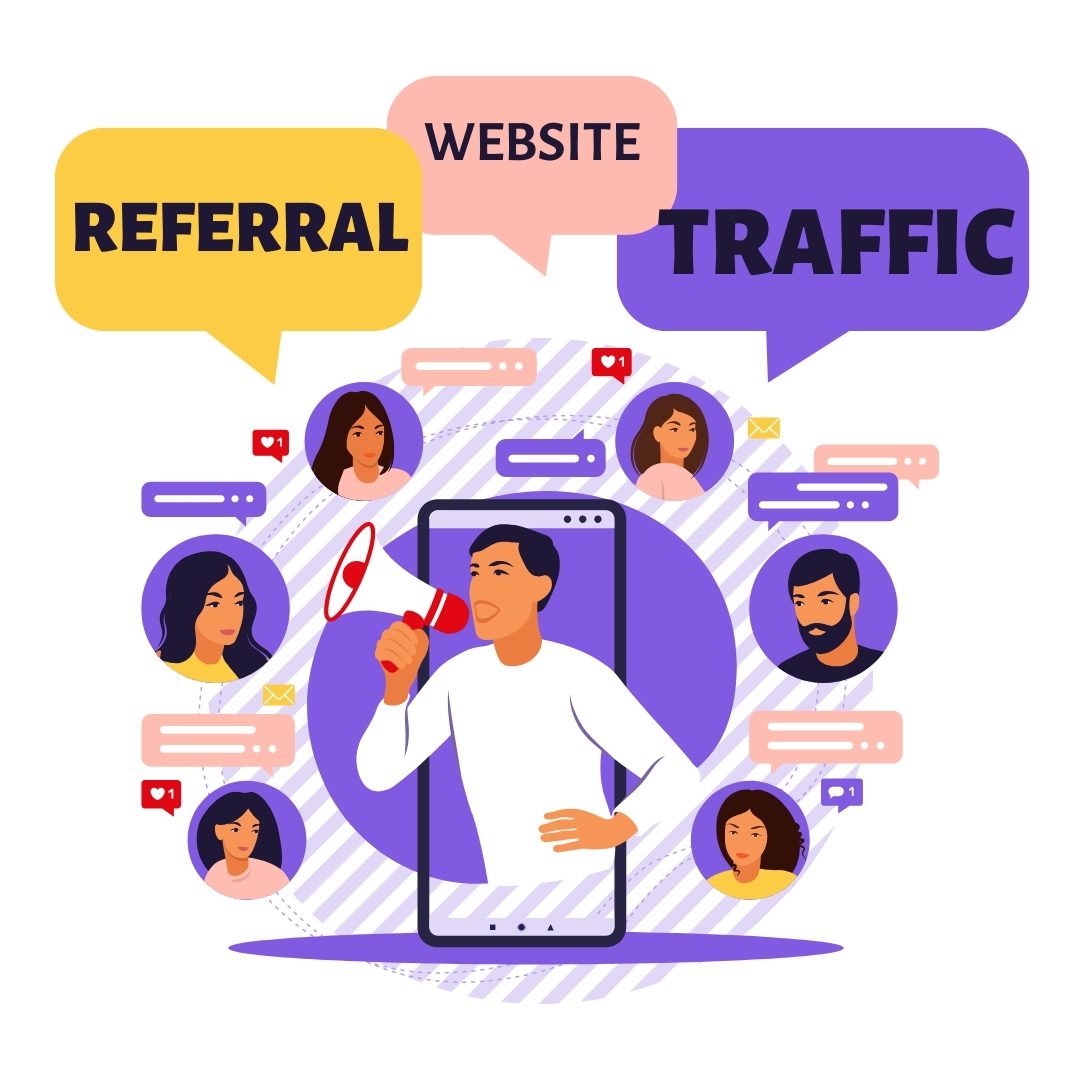
Unveiling Authentic Engagement – The Essence of Unique Referral Visitors
I. Introduction
- Navigating the Digital Landscape: The Crucial Role of Referral Traffic
- An exploration of how referral traffic shapes the online presence of websites.
- The impact of diverse traffic sources and the unique role played by referral visitors.
II. The Distinctive Characteristics of Referral Visitors
- Beyond the Clicks: Understanding the Essence
- A deep dive into what sets referral visitors apart from other sources.
- Examining the significance of user intent and the value they bring to a website.
- Behavioral Patterns and User Intent: Decoding the Uniqueness
- Analyzing the behavioral patterns of users arriving through referrals.
- Deciphering the intent behind their clicks and exploring how it influences engagement.
III. Strategies for Maximizing Engagement
- Leveraging Social Platforms: A Deep Dive
- Specific tactics for utilizing platforms like Facebook, Twitter, and Instagram.
- Encouraging social sharing and integrating buttons for seamless engagement.
- Building Backlinks and Partnerships: A Blueprint for Success
- Creating shareable content to attract organic backlinks.
- Collaborating with influencers and engaging in guest posting for increased visibility.
IV. Measuring Authentic Success: Analytics and Metrics
- Google Analytics Unveiled: Tracking Referral Traffic
- A step-by-step guide on tracking referral traffic sources within Google Analytics.
- Understanding user behavior and refining marketing strategies based on analytics.
- Key Metrics for Genuine Engagement
- Highlighting metrics such as bounce rate, page views, and conversion rates.
- Emphasizing the importance of metrics that reflect authentic user engagement.
V. Real-World Insights: Case Studies
- Websites Excelling in Referral Engagement: A Closer Look
- Case studies showcasing websites that have successfully harnessed referral traffic.
- Examining their strategies, challenges faced, and the outcomes achieved.
- Successful Approaches to Harnessing Unique Referral Visitors
- Extracting actionable insights from real-world success stories.
- Providing a roadmap for implementing effective referral traffic strategies.
VI. Overcoming Challenges: Navigating the Roadblocks
- Common Hurdles in Sustaining Referral Engagement
- Identifying challenges such as competition, content relevance, and user trust.
- Strategies for overcoming these challenges and ensuring sustained engagement.
- Strategic Solutions for Long-Term Success
- Offering practical solutions, including content optimization, community building, and continuous adaptation.
VII. Anticipating Trends: The Future of Referral Engagement
- Emerging Patterns and Behaviors: What Lies Ahead
- Predictions on how user behavior and referral traffic trends may evolve.
- Adapting strategies to align with future patterns for sustained success.
- Adapting Strategies for Future Success
- Recommendations for staying ahead of the curve and adapting to evolving online dynamics.
- The importance of flexibility and innovation in future-proofing referral engagement strategies.
VIII. Conclusion
- Summing Up: Unlocking the Full Potential of Unique Referral Visitors
- Recapitulating the key insights and strategies discussed throughout the article.
- Encouraging a proactive approach to continuously unlock the potential of referral traffic.
- Genuine Engagement in the Digital Age: A Continuous Journey
- Emphasizing the ongoing nature of building and maintaining genuine engagement.
- Concluding with a call to action for website owners to embrace the continuous journey towards authentic online interactions.
- Navigating the Digital Landscape: The Crucial Role of Referral Traffic
-
Stop Spending Money on Social Media – Here’s How to Get More Followers and Visitors

Stop Spending Money and Start Getting More Followers and Visitors through Social Media

Photo by fauxels on Pexels.com Social media is a great way to attract visitors and followers, but it can become expensive really fast. Trying to keep up with all the different sites, keeping your profile updated, and maintaining different accounts can be extremely time-consuming and expensive. But there are ways to cut those costs without sacrificing much.
Social media is about connecting with people who have similar interests. As such, you don’t need to spend money on paid advertising or other costly methods of attracting followers.
Instead, focus on creating content that will attract people sharing similar interests. Use free social media sites like Facebook, Twitter, Instagram, to share that content.
Don’t pay to have your posts seen by followers
There are a lot of companies that promise to push your content to your followers for a fee. Don’t buy Instagram followers cheap and Don’t Buy traffic website from some un trusted provider. This is another scam that can damage your brand. Your followers trust you and expect to see your posts in their feed.
If they don’t see them, they’ll be less likely to trust you and more likely to unfollow you. What’s worse, if something like that happens to you, Facebook could ban your account. You’ll lose all your followers and everything you’ve worked for. Instead, use tools like Hootsuite that allow you to schedule your posts for different times throughout the day. You can even target your followers so your post shows up more in their feed and less in their friends’ feeds.
If you want more visitors through social media and save money in the process, follow these tips:
Don’t Overpay for Advertising
While social media advertising has great potential to build your brand, it can also be very expensive. Depending on the platform, you could spend anywhere between a few hundred dollars a month to upwards of $10,000 or more. However, there are ways to cut down that cost.
First, research the different platforms and how much they charge. Find out what their average ad spend is and how long it takes for someone to see your ads. The more you know, the better able you’ll be able to negotiate prices and find the best deal.
Next, make sure you’re targeting the right audience. You don’t want to be spending money to attract people who aren’t interested in your brand. If your ads don’t seem to be working, take a second look at your targeting. If you’re really having trouble keeping your costs down, try lowering the amount you’re spending each month.
Start Using Free Social Media Platforms
As mentioned above, it’s important to focus on building your presence on free social media platforms. These sites are free to use, and you don’t have to worry about paying for advertising or boosted posts. Plus, social media networks are huge.
With millions of visitors, even if you can’t afford to advertise, you should still be able to find your audience. The only exception is if you’re trying to reach an older audience, where there is a greater presence on paid media. With that said, you should also try expanding your platforms to include other social media sites.
For example, while Facebook and Instagram are great places to find an audience, they’re also places where it’s difficult to stand out. If you use these platforms, but you’re not active on other social media sites, you’ll be lost in the noise. If you start using other sites, like Twitter and Google+, you’ll have a better chance of standing out.
Be Strategic With Paid Advertising
Paid advertising is almost always a necessity if you want to get your brand in front of a large audience. With that said, you don’t necessarily have to use the biggest platforms. You just need to find the ones with the right audience for your brand.
It can be tempting to just go with the biggest names in the industry and hope their reach extends to your target audience. But you should make sure you’re spending your money wisely. If you’re not targeting the right people, you’re just throwing money away.
So, when choosing paid advertising platforms, consider the following:
- Who is your target audience?
- Where do they spend their time online?
- What is the cost?
- Are you getting your money’s worth?
- How much reach do these ads have? What do you need to do to ensure they reach your audience?
- What can you do to improve your chances of success?
Be Strategic About What Networks You Use
As mentioned above, you don’t have to use every network. But you should try to find the ones that make the most sense for your brand and your audience. For example, if you sell baking supplies, Pinterest may not be the best place to build your presence. Plus, if you’re trying to promote a product or service, you don’t want to build your brand or try to sell on these sites. Instead, focus on building a following and maintaining a consistent presence.
There are several different social media networks you can use to build your following. Here are a few of the best ones: – Facebook: While this is mainly a place to connect with people in your real life, it’s also an excellent place to find potential customers.
Facebook is great for building an engaged following, but it’s also a great place to start selling your products.
– Twitter: Twitter is a great place to start building a brand, especially if you’re in the news or journalism industry. You can use Twitter to share your content and get attention from important people in your industry.
– Instagram: Instagram may be a visual platform, but it’s also a great place to build your following quickly. You can share images related to your niche, and you can even start selling your products.
Don’t Waste Money on Editorial Reviews
This one is pretty simple. It’s a scam. Don’t fall for it. Social media networks like Facebook don’t charge people to become verified by the company. That’s because they want to encourage people to sign up, not scare them away. https://en.wikipedia.org/wiki/Web_traffic
The only time they will charge a fee is if you have a business page and you want them to verify that it’s you. What’s worse, some scammers may even charge you to remove the verification, which is up to you to do. If Facebook is telling you that your page needs to be verified, all you need to do is ask a friend who has a verified page to do it for you.
Don’t waste money on editorial reviews
This one is simple. Editorial reviews are a scam. Don’t fall for them. These are companies that promise to boost your post, but they’ll charge you extra to do it. Editorial reviews are one of the worst ways to spend money on social media. Not only do you not know what people are saying about your product, but you also don’t know who is saying it. Instead, you should be spending money on advertising and boosting your posts. You don’t have to pay to have them shown to your followers, and it will be a lot cheaper. You can also boost posts from your audience, which will be much more natural.
Don’t forget about blogging
While you’re focused on building your social media presence, don’t forget about blogging. Not only is blogging free, but it’s also a great way to attract new followers. Blogs are one of the best ways to build your brand. Cheap website traffic easy to create and can be shared on social media. They can also be shared with e-newsletters or sent to friends and family. With that said, blogging takes time. You don’t want to forget about your social media presence while you’re working on your next blog post. Instead, you should be
-
How To Start A Business – The Ultimate Guide For Every Stage of the Process


Image Source: Flickr
Starting a business is no easy task. It’ll involve plenty of hard work, self-motivation and discipline. But if you have the courage and determination to make your business dream come true, you can do it. Starting a company isn’t as scary as some people may think.
It doesn’t need to be an extremely complicated process either. In fact, starting your own business is a great way to boost your job security while simultaneously creating new career opportunities for yourself in the process.
Becoming your own boss might sound frightening or risky at first, but it’s not as scary as you might think. If you’re ready to take the plunge into entrepreneurship and are eager to know how to start a business, we can help. Here is the ultimate guide for every stage of the process.
Step 1: Determine your core business values and goals
Before you start your actual business planning, it’s important to take some time to reflect on the values and goals that you want to see reflected in your business.
Doing so will help you clarify exactly what sort of path you want your business to take. Evaluate your core values and the reasons behind why you want to start a business.
- What problem are you trying to solve?
- What are your strengths and weaknesses as an entrepreneur?
- What are some examples of past success that you’ve had?
Step 2: Conduct market research
The next step in how to start a business is to conduct market research. You’ll need to determine if there is a demand for your product or service in the marketplace.
If you’re not sure what product or service to offer, or if you’re having trouble coming up with a profitable and scalable business idea, you can use a marketplace demand analysis tool to get some helpful suggestions.
You should also consider the cost of entry for your business idea. How much does it cost to get your business off the ground? What are the typical start-up costs for your industry?

Photo by Karolina Grabowska on Pexels.com Step 3: Come up with your product or service
Once you have an idea of what product or service you want to offer, it’s time to get a bit more specific. You’ll want to nail down the specifics of what your product or service will look like.
You should also clearly outline the benefits that your product or service offers. This will help you market your business in a way that resonates with your customers. You should also research the demand and competition levels of your product or service.
You can use a tool like the Product Demand Calculator to get an overview of demand levels for your product or service idea.
Step 4: Choose the right Company Name
This is probably one of the most important steps for how to start a business. Your company name represents you and your business. It needs to be memorable, easy to spell and pronounce, and it must differentiate your business from your competitors.
Depending on the type of business that you choose to start, you might have to register your business name as a trademark.
Doing so will help protect your brand from copycats and competitors who might try to falsely sell your product. Registering your trademark can be tricky since you must do so before you launch your business.
Step 5: Decide on your Corporation Type
There are a few different types of business structures that you can choose from when starting your company. You should choose a business structure based on your personal situation and the type of company that you plan to run.
You should also be aware that the decision you make now could affect your taxes down the road. The most common business structures include:
– Sole proprietorship
– Partnership
– Corporation
– S Corporation
– LLC
Step 6: Pick a Registered Business Name
If you don’t already have a name picked out for your business, you’ll want to do so now. This name will be displayed on all of your business documents and it will be what people associate with your products or services.
You should also check to see if your business name is available for use. You can do so by typing it into the free trademark search tool provided by the United States Patent and Trademark Office.
Step 7: Determine your startup costs
Before you start spending your hard-earned money, you’ll need to take a good look at your financial situation and determine how much money you’ll need to start your business.
You should calculate your monthly expenses to see how much you’ll need to cover your bills while your business is getting off the ground. You’ll want to factor in business-related expenses like rent, utilities, insurance, and promotional materials like flyers and brochures.
Step 8: Pick a date and register your Company
Now that you’ve chosen a business structure, come up with a name, and estimated your startup costs, it’s time to get down to the nitty-gritty. Start by gathering all of your documents.
You’ll need to file paperwork with government agencies, as well as your state’s Chamber of Commerce. You should also create a business plan and make sure that it outlines the direction that you want your business to go.
Finally, you’ll want to pick a specific date to register your company and make sure that you do so before that month ends.
Conclusion
Congratulations! You’ve made it through the process of how to start a business and you’re now ready to launch your very own company. It’s an exciting and thrilling time in your life and we hope that you’re as eager as ever to get started on your entrepreneurial journey.
With just a little bit of research, some creativity, and a willingness to take risks, you can make your business dream a reality. It’s never too late to start your own company.
-
Subscribe
Subscribed
Already have a WordPress.com account? Log in now.
 Quick Note Data Blog